Almond Lemon Sponge Cake

I just started organizing my recipes and testing select ones for my Crafty Cookery Cookbook but paused in the process last night to create a gluten free sponge cake for my dear friend Sonie. I cobbled together four different recipes I found online, added my secret gluten replacement ingredient (chia seeds) and tossed it in the oven. It turned out beautifully, though I’m really glad my stand mixer came with two mixing bowls since this cake is fairly labor intensive but well worth the effort.

I ground my chia seeds in a coffee grinder I keep reserved for herbs and spices since whole chia seeds would give the cake a weird texture. Flax seed meal or psyllium husk powder would work just as well.

I baked my cake in a 9″x9″ cake pan so the timing will be different for cakes baked in a sheet pan or a jelly roll pan. Keep an eye on it and when the top is light brown and a toothpick inserted into the center comes out clean, it’s done.

To adapt this recipe for grain free diets, instead of corn starch substitute for either arrow root powder or tapioca starch.

I used local wildflower honey in this, which is my favorite for baking. It’s not quite as sweet as clover honey and has a more delicate flavor. Next time I may use the lavender infused clover honey I made.

6 eggs, separated
1 cup almond meal
1/2 cup honey
1/4 cup corn starch
2 Tbs lemon juice
1 Tbs lemon zest
1 Tbs ground chia seeds
1 1/2 tsp baking powder
1/4 tsp salt

Preheat oven to 350*F. Prepare bake pan with oil and/or parchment paper. Separate eggs into two mixing bowls. Add honey, lemon juice, lemon zest, ground chia seeds and salt to the egg yolks. Beat until eggs are light yellow and ingredients are combined. Whip egg whites until stiff peaks form. In another mixing bowl combine almond meal, corn starch and baking powder. Stir until ingredients are evenly combined. Pour the dry ingredients into the egg yolk and honey mixture. Stir until well combined. Gently fold in the egg whites. Pour batter into the prepared bake pan. Bake until the top of the cake is light brown and a toothpick inserted in the center comes out clean. 30-35 minutes for a 9″x9″ square pan or a 9″ round cake pan, 5-10 minutes for a jelly roll/sheet pan.

Posted in Dairy Free, Dessert, Gluten Free | Leave a comment

Chronically Ill Cooking: The Freezer

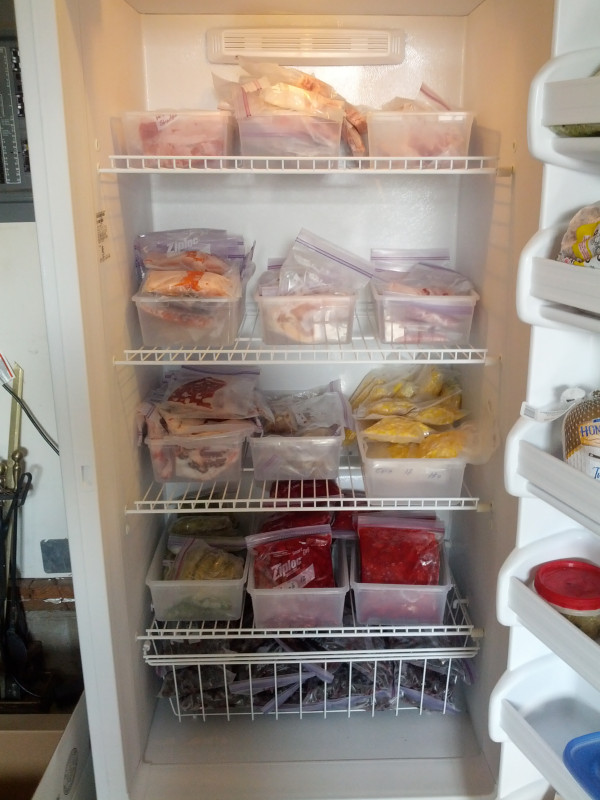
One of my twitter followers and fellow chronically ill foodie suggested I write about food storage after seeing a photo of my freezer.

Freezer

A well stocked freezer is a must have for the chronically ill cook. There are too many days when I don’t have the energy to cook or the ability to stand long enough to prep ingredients. Having frozen items on hand means I can easily reheat something or toss items into a pot for soup or stir fry.

I buy food in bulk, usually when they’re on sale, break it down into single serving sizes and seal them in freezer bags. I keep a variety of proteins in 3-4 ounce servings in bins: beef, chicken, pork, lamb, and several varieties of fish. I also have bags of diced fruit and veggies, much of it from my parents’ garden, in either quart sized bags or pre-measured amounts. These include: berries, roasted beets, carrots, celery, corn, melon, onions, peas, pumpkin, and squash. My mom also makes apple and plum sauce and freezes half cups of it in bags. All of these things can be easily turned into meals and I don’t have to worry about being well enough to go grocery shopping or running completely out of food.

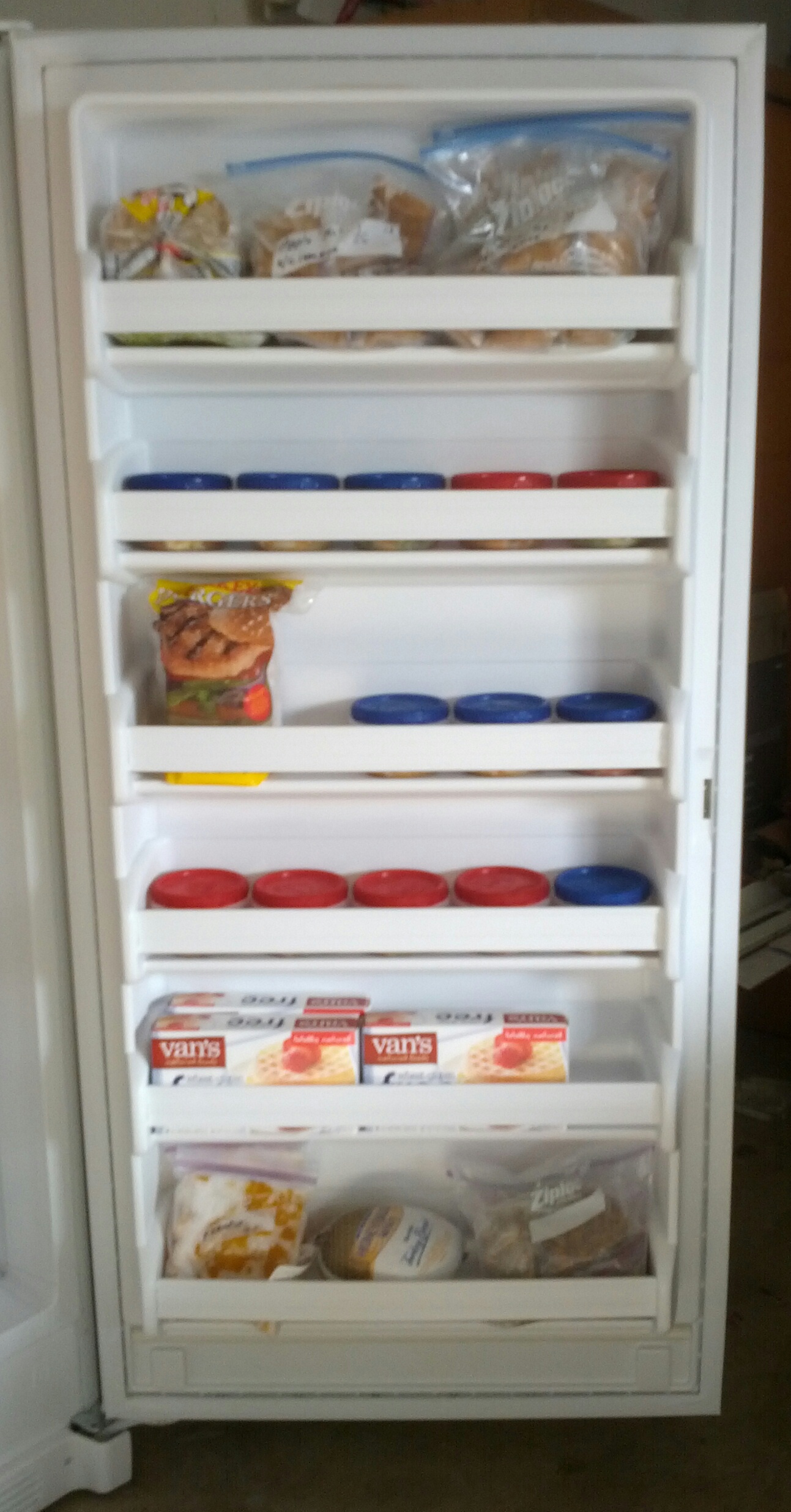
In the door of my freezer I keep ready-to-eat meals and the few store bought convenience foods I eat, mostly bread, gluten free waffles, and turkey burgers. I package my leftovers in 2 cup freezer and microwaveable safe plastic containers with screw top lids. They fit perfectly in the door and contain just enough for a single meal. I mostly freeze soups, stews, beans, rice or quinoa dishes since they keep and reheat well and are packed with nutrition.

Freezer door

Living without my freezer would make eating and cooking nutritious meals difficult. I’d love to physically be able to cook every meal and grocery shop several times a week but that’s not realistic. It takes time, energy, and money to keep my freezer full but it’s resources well spent and in the long run saves me more than I use.

Posted in Cooking | Leave a comment

Grain Free Blueberry Peach Crumble

I love fruit crisps, crumbles and buckles. They’re easy to throw together and pack a lot of flavor and nutrition into a dessert without requiring a lot of ingredients.

A few weeks ago I stopped at the veggie/fruit market near my house and picked up several pints of local blueberries and Washington peaches. I decided to combine the two with an almond coconut crust. The resulting crumble was absolutely delicious. A tablespoon of sweetener of your choice can be added to the crumble crust but the fruit was sweet enough alone I don’t think it needed it. Corn starch or tapioca starch can be used in place of arrowroot to thicken the fruit.

3 cups blueberries
4 ripe peaches, diced
1 cup almond meal
2 Tbs coconut flour
1 Tbs coconut oil
1 Tbs arrowroot powder
1/4 tsp baking soda

Preheat oven to 350*F. In a 9×9 baking dish combine blueberries, diced peaches and arrowroot. Mix until fruit is fairly evenly coated in arrowroot powder. In a small mixing bowl, combine almond meal, coconut flour, baking soda and coconut oil. Mix together with finger tips or a fork until it forms a breadcrumb texture. Pour the crumble crust evenly over the fruit. Bake for 20-25 minutes until the crust is lightly browned and the fruit is bubbling.

Posted in Dairy Free, Dessert, Gluten Free, Grain Free, Specialized Diets | Leave a comment

Mushroom and Goat Cheese Oat Groat Risotto

Oat groats are an undervalued whole grain but one packed with nutrition and flavor. It takes a little planning ahead since it’s best to soak them for several hours or overnight before cooking but well worth the extra time and effort.

The severe pain in my right side I used to get from dairy products is gone after more than three years. I slowly added dairy products back into my diet only to discover they cause sinus issues. Cow’s milk dairy seems to be the worse culprit and I can still do limited amounts of goat’s milk dairy. This recipe is one of my favorite ways to use goat cheese. If you’re dairy free then the goat cheese can be left out entirely, replaced with a tablespoon or two of coconut cream or a good nondairy cheese replacement.

I’ve made this with crimini mushrooms as well as a wild mushroom blend and both were equally good. I recommend using whatever you like and have available. Same thing with the wine. If it’s something you like to drink then use it. I found a nice Australian chardonnay with slightly fruity notes that I use for most of my cooking needs. If you’re alcohol free then use an extra half cup of reserved liquid and a few tablespoons of white balsamic vinegar.

4 cups water
1 cup oat groats
1/2 cup white wine
1/4 cup flat leaf parsley, finely chopped
6oz mushrooms, diced
2oz chevre goat cheese
2 shallots, minced
1 tbs grapeseed oil
2 tsp fresh thyme
1 tsp salt

Soak the oat groats for 3-4 hours. Drain, reserving the liquid. In a medium sized sauce pan, heat oil and add shallots. Cook until they’re translucent. Add oat groats, mushrooms, salt and white wine. Simmer on low until liquid is absorbed, stirring often. Add reserved liquid from soaking the oats, a half cup at a time, allowing it to absorb before adding more. You may not need all the reserved liquid. Cook until the oat groats are done to your liking. I prefer mine to be slightly underdone so they still have some texture. Add thyme and goat cheese and stir until the goat cheese is melted into the risotto. Remove from heat and stir in the parsley. Serve.

Posted in Gluten Free, Side Dish | Leave a comment

Dairy Free Cauliflower Pizza Crust

I made this for the second time today and think I’ve found the right combination of ingredients. The first time I only used cauliflower and eggs and while it was good, it didn’t hold together very well. I browsed similar recipes and found that most of them used some form of cheese, either shredded Parmesan or goat cheese, to bind it together. Since I didn’t want to use either, I used golden flaxseed meal. It worked better than I expected. The crust stood up under the pizza toppings and held together well enough I could eat it without a fork.

I riced my cauliflower in a food processor in batches, pulsing a quarter of it at a time. If you don’t have a food processor, the cauliflower can be grated on a box grater.

I topped mine with Daiya mozzarella shreds, heirloom tomato slices, sautéed mushrooms, green peppers and precooked chicken Italian sausage. It was practically perfect.

I’ve also baked the crusts in round cake pans for individual pizzas and froze them for later use. It worked brilliantly.

1 head of cauliflower, cut & stems removed from florets (approx. 3-4 cups riced cauliflower)
2 eggs
1/4 cup golden flaxseed meal
1 Tbs dried oregano
1 tsp granulated garlic
1 tsp salt

Preheat oven to 425*F. Prepare a large baking sheet with parchment paper. Rice cauliflower and put in a big bowl. Add flaxseed meal, eggs, herbs and seasonings. Mix until well combined. Pour mixture onto parchment paper and pat out evenly, leaving a higher edge around the perimeter if desired. Bake for 30-40 minutes until lightly browned. Remove from the oven and add desired toppings. Return to the oven for ten minutes to melt the cheese and heat the toppings through. Slice and serve.

Posted in Breads, Dairy Free, Gluten Free, Grain Free, Specialized Diets | Leave a comment

Tomato Gratin with Amaranth and Quinoa

I’ve been doing a lot of cooking this summer but eye issues have kept me off the computer. Hopefully I can get back to posting on a regular basis again.

This in the first summer in a very long time that I’ve been able to eat tomatoes. I have four different heirloom varieties growing in my yard and my parents’ garden has at least six more. I needed a vehicle for these awesome tomatoes and found an interesting tomato gratin recipe. The original called for croutons but bread, even gluten free bread, isn’t exactly packed with nutrients. I opted for a combination of amaranth and quinoa. Both grains are filled with essential amino acids and quinoa is a complete protein source as well. I adapted this recipe to fit my dietary restrictions so I used Daiya nondairy mozzarella cheese shreds on top instead of Parmesan. I used basil vinaigrette to add herbaceous notes to this dish but dried or fresh herbs of any variety would work as well.

6-8 medium heirloom tomatoes, diced
3 cloves garlic, minced
1 cup quinoa, uncooked
1 cup amaranth, uncooked
1/2 cup shredded Parmesan cheese or nondairy cheese substitute
1/2 cup packed basil leaves
1/4 cup olive oil
2 Tbs white balsamic vinegar
1 Tbs salt

Preheat oven to 350*F. In a large baking dish combine diced tomatoes, garlic, quinoa, amaranth and salt. Mix together, cover with aluminum foil or a lid, and bake for 45 minutes. In a blender, pulse basil, olive oil and balsamic vinegar until smooth. Set aside. Remove the tomato mixture from the oven, uncover and stir well. Sprinkle cheese on top of the tomatoes and pour the basil vinaigrette over it. Return to the oven and bake for another 20-30 minutes, until the grains are fully cooked and the cheese bubbling. Allow to cool at least 10 minutes before serving.

Posted in Gluten Free, Main Course | 2 Comments

4 Day Rotation Diet Plan

Last month I asked my MD about getting allergy tested since my health was starting to decline with the arrival of spring. I expected a referral to an allergist even though my last appointment with one a few years ago didn’t yield anything helpful. My MD suggested we do blood serum tests through the outside lab she uses. This had the benefit of also checking for food sensitivities (IgG) as well as allergens (IgE). There is a lot of controversy about IgG testing and it’s universally panned by allergists but I’ve had sensitivities to foods for most of my life and IgG testing seems to be a way to predict what sensitivities may be next. From personal experience I know that if I saturate my system with the same food or medicine I will start reacting to it. One winter I ate too much pineapple, cantaloupe and watermelon and I couldn’t eat any fruits other than avocados, bananas and fresh lemons for ten years without experiencing a rash, hives and/or swollen eyes. Last year I attempted Dr Terry Wahls’ diet plan for Mitochondrial Dysfunction and I ate too much leafy greens, organ meat and sweet peppers; I still get a sharp pain in my right side when I eat them. The last allergist I saw when my food sensitivities included dairy, gluten, cane sugar, yeast, eggs, and potatoes basically told me that some people are sensitive and I have to live with it. Since I wasn’t having anaphylactic reactions or hives it wasn’t something the allergist could do anything about. Thanks to the supplement regime my MD started me on last year I’ve been able to add most of those foods back into my diet after three years of elimination and I’m on a three day rotating diet to help prevent further food sensitivities.

Monday I got my test results from my MD. I didn’t have any foods in the IgE (allergen) test and my food sensitivities weren’t as bad as I expected. They’re listed by how much antibodies were in my blood and given rankings of high, moderate and low. Below are my IgG results. Items marked with two asterisks (**) are foods I currently eat multiple times a week and items marked with one asterisk (*) are items I’ve had reactions to either in the past or currently. The treatment plan to reduce the number of antibodies in my blood is an elimination diet along with a four day rotation diet to prevent further sensitivities. High items are to be eliminated for six months, moderate for four months and low for two months. My MD doubled the usual elimination times because my body really doesn’t like to detox properly.

High: Banana** Pineapple** Asparagus, Sunflower Seeds, Vanilla

Moderate: Broccoli** Crab, Fennel, Ginger*

Low: Alfalfa, Cucumber** Chocolate* Coffee* Sesame

The lab my MD uses for testing included a four day rotation diet plan in with my test results. It’s much more detailed than the 3 day plan I’m currently on but some things will be easier. With many food groups I can eat something from that family every two days just not repeat the same food for four days. For instance I can have an apple on day two and a pear on day four. Both are from the pome fruit family. Fish can be eaten daily as long as it’s a different type/family of fish. The only category I found missing from the plan below is gluten free grains/seeds like quinoa, amaranth and millet. Once I start following this plan then I’ll find the best place to add it in.

Day One:
Eggs
Poultry: chicken, turkey, duck, pheasant, capon
Mollusk: abalone, clam, mussel, oyster, scallop, squid
Fish: cod, haddock, pollock, sole, petrale, tilapia
Stone Fruit: plum, prune, cherry, peach, apricot, nectarine, almond
Rose Family: raspberry, blackberry, loganberry, strawberry
Latex Fruit: banana, plantain, arrowroot, mango
Gluten Containing: wheat, rye, oats, spelt, triticale, kamut, barley
Legumes: lentil, pea, pinto bean, soy, kidney bean, peanut, string bean, alfalfa, licorice, acacia
Mustard Family: mustard, cabbage, collard greens, cauliflower, broccoli, brussel sprouts, turnips, kale, rutabagas, kolhrabi, radish, horseradish, watercress
Composite Flower: lettuce, endive, chicory, escarole, artichoke, dandelion
Nightshade Family: potato, tomato, eggplant, peppers, tomatillo, pimento, tobacco
Goosefoot Family: beet, spinach, chard, Swiss chard
Sesame
Olive
Coffee

Day Two:
Cow milk dairy
Beef/Veal
Crustaceans: lobster, crab, crayfish, shrimp
Fish: salmon, trout, mackerel
Citrus Family: orange, grapefruit, lemon, lime, tangerine, kumquat
Pome Fruit Family: apple, pear, quince
Heath Family: blueberry, cranberry, huckleberry
Walnut Family: walnut, butternut, hickorynut, pecan
Lily Family: asparagus, onion, garlic, chives, leeks, aloe vera
Parsley Family: parsley, parsnip, carrot, celery, caraway, anise, dill, fennel, coriander, cilantro
Gourd Family: cantaloupe, melon, cucumber, pumpkin, summer squash, winter squash
Fungi: mushrooms, yeast
Papaya
Corn

Day Three:
Poultry: chicken, turkey, duck, pheasant, capon
Mollusk: abalone, clam, mussel, oyster, scallop, squid
Fish: sardine, tuna
Stone Fruit: plum, prune, cherry, peach, apricot, nectarine, almond
Rose Family: raspberry, blackberry, loganberry, strawberry
Gluten Containing: wheat, rye, oats, spelt, triticale, kamut, barley
Legumes: lentil, pea, pinto bean, soy, kidney bean, peanut, string bean, alfalfa, licorice, acacia
Mustard Family: mustard, cabbage, collard greens, cauliflower, broccoli, brussel sprouts, turnips, kale, rutabagas, kolhrabi, radish, horseradish, watercress
Nightshade Family: potato, tomato, eggplant, peppers, tomatillo, pimento, tobacco
Goosefoot Family: beet, spinach, chard, Swiss chard
Laurel Family: avocado, cinnamon, bayleaf
Cane sugar: cane sugar, molasses, sorghum
Pineapple
Chocolate

Day Four:
Goat milk dairy
Lamb
Pork
Crustaceans: lobster, crab, crayfish, shrimp
Fish: red snapper, rockfish, catfish, halibut
Citrus Family: orange, grapefruit, lemon, lime, tangerine, kumquat
Pome Fruit Family: apple, pear, quince
Heath Family: blueberry, cranberry, huckleberry
Walnut Family: walnut, butternut, hickorynut, pecan
Lily Family: asparagus, onion, garlic, chives, leeks, aloe vera
Parsley Family: parsley, parsnip, carrot, celery, caraway, anise, dill, fennel, coriander, cilantro
Gourd Family: cantaloupe, melon, cucumber, pumpkin, summer squash, winter squash
Morning Glory Family: sweet potato, yams
Fungi: mushrooms, yeast
Buckwheat Family: buckwheat, rhubarb, sorrel
Grapes
Rice

4 Comments

Baked Caramelized Onion Rice Fritters

I was watching Chopped, one of my favorite Food Network shows, the other night and a chef threw rice, caramelized onions and an egg into a food processor and then fried the mixture to make fritters. It looked fantastic, other than the fried part. Tonight I felt well enough to cook and I had leftover brown rice already cooked and waiting in the fridge. It was the perfect opportunity to make rice fritters, only baked to make them more healthful rather than fried.

I seasoned the fritters generously with salt, pepper and Herbs de Provence. If you don’t have Herbs de Provence then I suggest using thyme.

They didn’t brown up quite the way I wanted them to in the oven but they were crunchy on the outside and creamy on the inside just the way they should be. The only thing that could have made the fritters better would be a few ounces of goat cheese added to the mix. Maybe next time.

3 cups cooked brown rice, cooled
2 medium onions, sliced
1 egg
1 Tbs olive oil
1 tsp Herbs de Provence
1 tsp sea salt
1/2 tsp ground black pepper

Preheat oven to 350*F. Prepare a baking sheet with parchment paper. In a large saucepan, heat oil on medium heat and add onions. Stir often until light brown in color. Combine brown rice, egg, Herbs de Provence, and pepper in a food processor. Pulse a few times to break up the egg. Add onions once they’re caramelized and pulse until well combined. Spoon mixture onto parchment paper to make equal sized fritters. I used about a quarter cup for each one but you can make them smaller or larger. Flatten them out with the back of the spoon so they’re about a half inch high. Bake for 20-25 minutes until tops and bottoms are slightly brown.

Posted in Dairy Free, Gluten Free, Side Dish, Specialized Diets | 2 Comments

Shrimp and Avocado Pasta Salad

I’m made this a couple of times in the past month so decided to actually measure ingredients when I made it yesterday. I cooked the onions along with the shrimp since I discovered that raw onions give me headaches but I wrote the recipe out the way I’d prefer to eat it, if I could. Onions, cilantro and Thai chili sauce are all optional but add extra layers of flavor I think are necessary.

1 cup dry penne pasta, cooked & cooled (I used quinoa pasta)
8 oz shrimp, cooked, deveined & diced
2 tomatoes, diced
2 avocados, diced
1/2 medium onion, diced
1/2 cup cilantro leaves, chopped
1/4 cup olive oil mayonnaise
1 Tbs Thai chili sauce
1 tsp salt
juice of one lime

In a large bowl, add pasta, shrimp, tomatoes, avocados, onion, and cilantro. Gently mix together. In a small bowl, combine mayonnaise, Thai chili sauce, salt and lime juice. Whisk ingredients together and pour over the pasta and vegetables. Carefully stir the dressing into the pasta mixture. Cover and refrigerate for at least an hour before serving.

Posted in Dairy Free, Gluten Free, Salads, Side Dish, Specialized Diets | Leave a comment

Crispy Rosemary Orange Duck

A friend visited me for Solstice this year which meant I had someone to cook for other than myself. Luckily my health has improved so much that I was able to cook for us both days she was here. On Yule I roasted a duck, made wild rice with almonds and dried cherries, and orange glazed parsnips. We had fresh pomegranates for dessert. The day after Yule I broiled lamb shoulder steaks and made oven roasted asparagus with garlic. My guest got to sample a lot of new foods and I got to feed someone other than myself, which is one of my favorite things. 🙂

I cooked the duck low and slow, piercing the skin to release the fat underneath the skin then basted the duck with the orange juice and molasses and turned up the heat. The skin turned a beautiful mahogany color and was super crispy and flavorful. The duck fat from the bottom of the pan can be saved and used in other recipes.

1 duck, thawed, rinsed and patted dry
2 sprigs of fresh rosemary
2 satsumas or clementines, quartered
1/4 cup fresh squeezed orange juice
2 Tbs molasses
1 tsp finely minced rosemary
Salt and pepper

Preheat oven to 300*F. With a fork, pierce the skin all over the duck. Liberally salt and pepper the bird, inside and out. Truss the duck with butcher string. Stuff the inside of the bird with the sprigs of rosemary and citrus quarters. Place the duck in a roasting pan with a rack and cook for 4 hours. Every hour turn the duck over and pierce the skin with a fork. You want the fat underneath the skin to melt and drip off the bird. Combine the orange juice, molasses and minced rosemary. After 4 hours, increase the oven temperature to 400*F. Brush the orange glaze all over the duck. Roast at higher temperature for ten minutes. Baste the duck with the rest of the glaze, turn it over and cook for another ten minutes. Remove the duck from the oven, remove citrus and rosemary from the cavity and discard them, and let duck rest for ten minutes before carving.

Posted in Dairy Free, Gluten Free, Main Course, Specialized Diets | 1 Comment